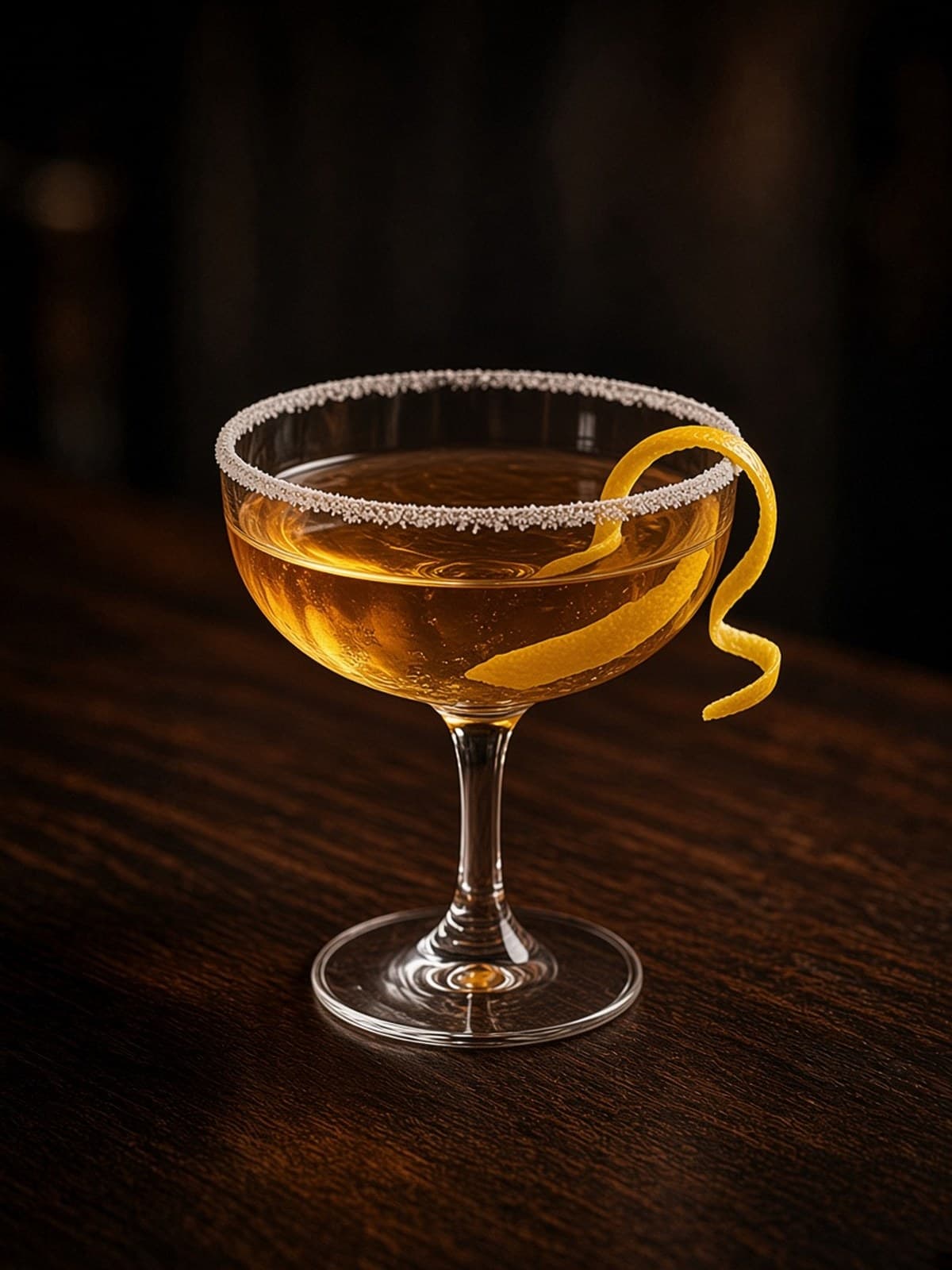
Brandy Crusta
- Glass
- Coupe
- Difficulty
- Medium
- ABV
- ~26%
Ingredients
- 1¾ ozcognac52 ml
- ¼ ozmaraschino liqueur8 ml
- 1 barspoontriple sec or cointreau5 ml
- ½ ozfresh lemon juice15 ml
- 1 barspoonsimple syrup5 ml
- 2 dashesangostura bitters2 dashes
Instructions
Chill a thin-lipped coupe or small wine glass. Rim the outside of the glass with superfine sugar — wipe a lemon wedge around the outer lip only, then roll it in sugar so the crust sits on the rim, not in the drink. Combine the cognac, maraschino, Cointreau, fresh lemon juice, simple syrup, and Angostura in a shaker with ice. Shake for 10–12 seconds — the lemon needs agitation to knit with the liqueurs, even though some books stir this one. Double-strain into the sugar-crusted glass, no ice. Cut a long, wide lemon peel, express it over the surface, and hang the spiral so it drapes inside the glass like a lining. That peel is the Crusta’s signature, not decoration.
Sips & Tips
Technique
The sugar crust belongs on the outside of the rim. If sugar falls into the drink it turns the first sip into syrup. Use a thin glass — a heavy rocks glass kills the silhouette. Shake just long enough to chill and integrate the lemon; over-shaking waters a drink that is already light on citrus. The long peel should sit inside the bowl so every sip picks up lemon oil. If your peel tears, cut a second one rather than using a short twist.
Balance
This is a Sidecar with more architecture and less lemon. The IBA ratios keep cognac in front: Rémy Martin VSOP or Pierre Ferrand 1840 both have enough dried fruit to stand up to maraschino. Luxardo is the maraschino that belongs here — cherry-almond, not neon syrup. If the drink tastes thin, your lemon ran hot; drop the juice to a scant ½ oz rather than adding more syrup. If it tastes heavy, you used too much Cointreau. The sugar rim is the sweetener the drinker controls.
History
Joseph Santini created the Crusta in the 1850s at the City Exchange in New Orleans — a sugared rim and a whole citrus lining around a small wine glass. Jerry Thomas printed it in 1862, and it sits on the current IBA Unforgettables list as the ancestor of the Sidecar. The modern bar often treats it as a forgotten cousin; it is not forgotten so much as skipped because the peel and crust take thirty extra seconds. Those thirty seconds are the drink.
The Brandy Crusta is the Sidecar’s older, better-dressed relative. Take the time for the crust and the long peel. Cheers.
Variations
Sidecar
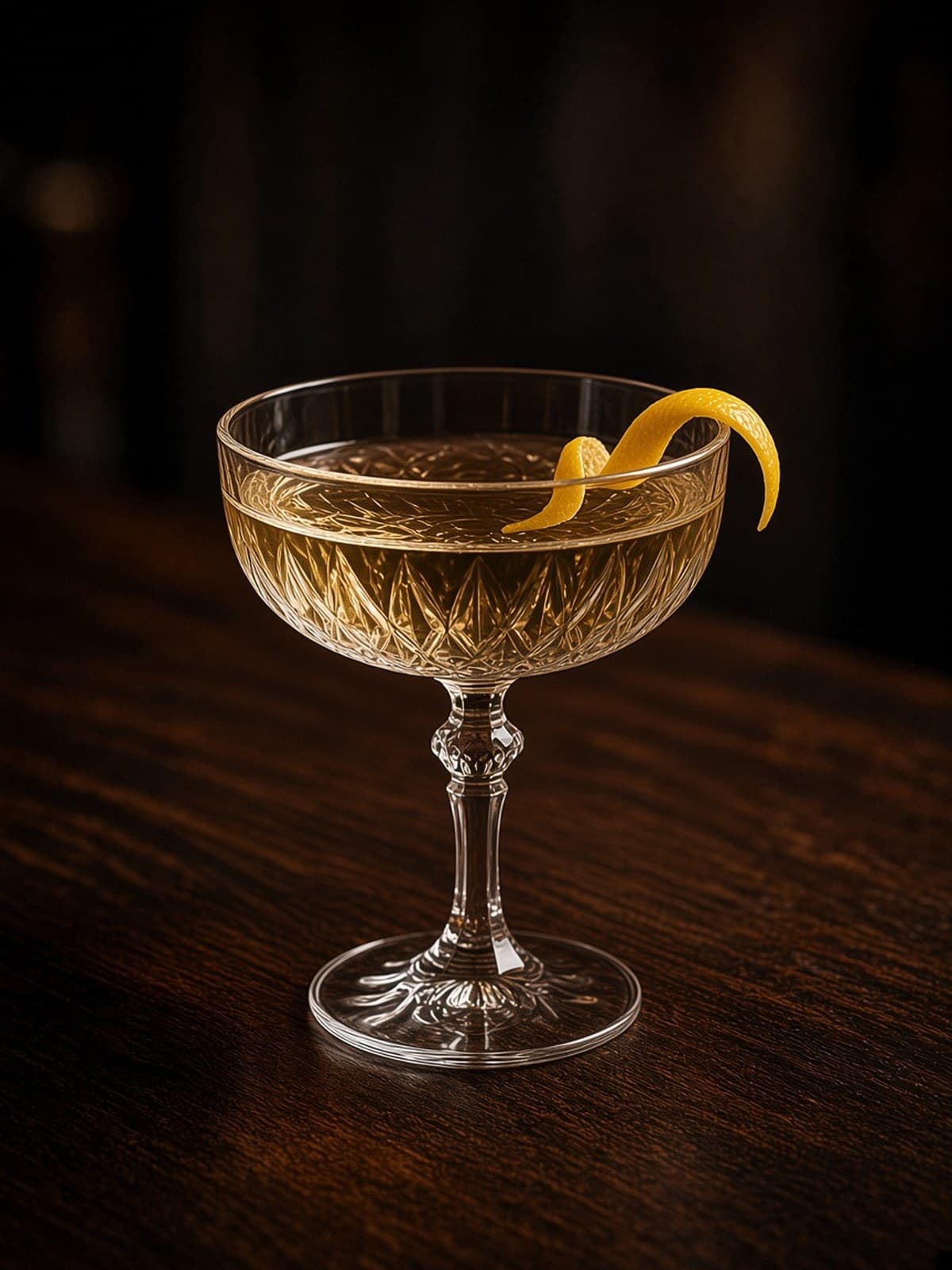
When you want the same cognac-citrus family without the sugar crust and long peel, make a Sidecar: 2 oz cognac, ¾ oz Cointreau, ¾ oz lemon, shaken into a coupe. Use it on a weeknight; keep the Crusta for when you can fuss with the glass.
Bourbon Crusta
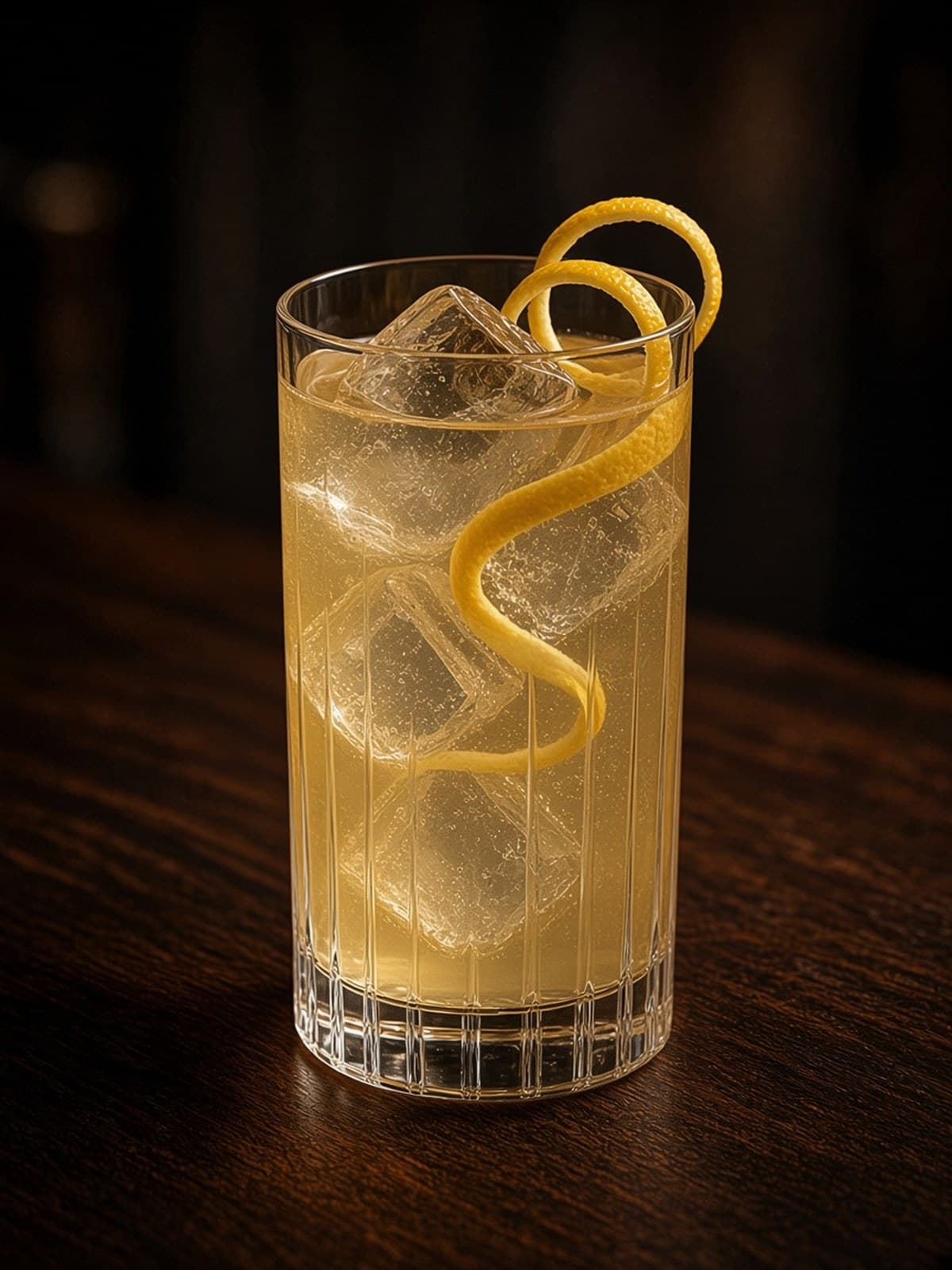
Swap the cognac for a high-rye bourbon if the bottle you have is whiskey, not brandy. The grain spice sits well against maraschino. Keep the sugar rim and the long lemon peel — without them it is just a whiskey sour in a coupe.
You might also like


Brandy Crusta
Glass: Coupe | Difficulty: Medium | ABV: ~26%
Ingredients
- 1¾ oz cognac
- ¼ oz maraschino liqueur
- 1 barspoon triple sec or cointreau
- ½ oz fresh lemon juice
- 1 barspoon simple syrup
- 2 dashes angostura bitters
Instructions
Chill a thin-lipped coupe or small wine glass. Rim the outside of the glass with superfine sugar — wipe a lemon wedge around the outer lip only, then roll it in sugar so the crust sits on the rim, not in the drink. Combine the cognac, maraschino, Cointreau, fresh lemon juice, simple syrup, and Angostura in a shaker with ice. Shake for 10–12 seconds — the lemon needs agitation to knit with the liqueurs, even though some books stir this one. Double-strain into the sugar-crusted glass, no ice. Cut a long, wide lemon peel, express it over the surface, and hang the spiral so it drapes inside the glass like a lining. That peel is the Crusta’s signature, not decoration.